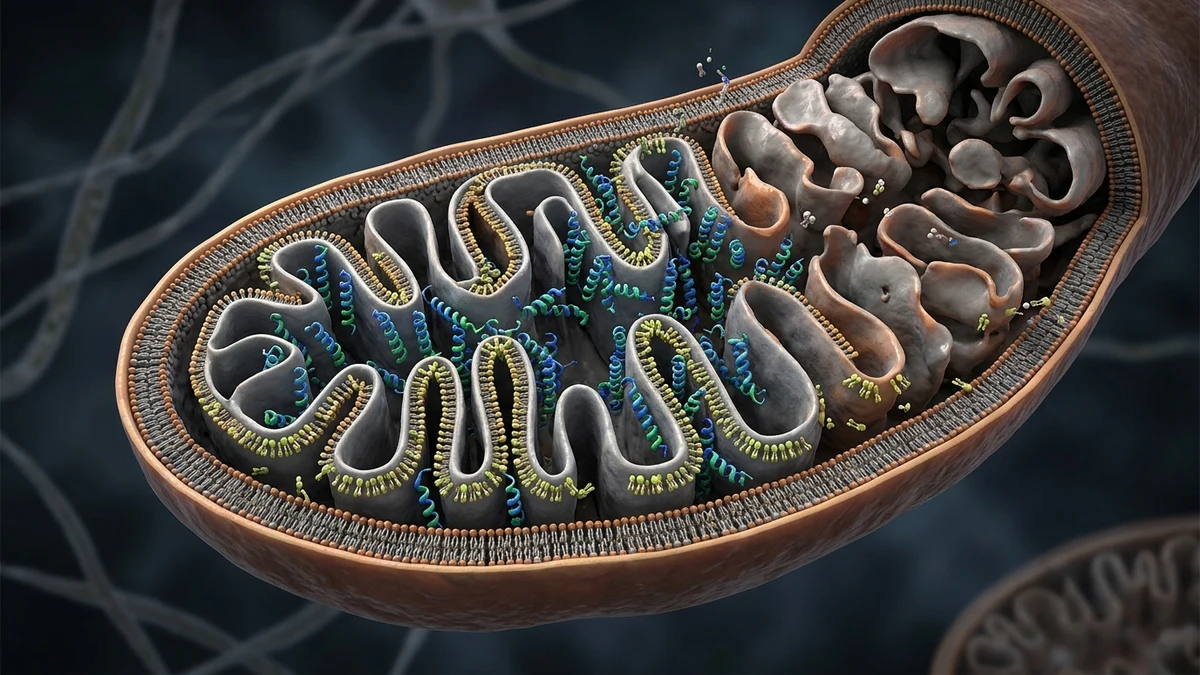
SS-31 is a synthetic tetrapeptide that has attracted serious attention in mitochondria research for a specific reason: its mechanism is unusually well-characterized. Most compounds described as "mitochondria-protective" work through indirect or poorly defined pathways. SS-31, also known as elamipretide, operates through a direct physical interaction with the inner mitochondrial membrane, and the molecular story behind that interaction is genuinely worth unpacking. Pre-clinical data across cardiac, renal, and skeletal muscle models have produced some of the more consistent findings in the mitochondria-targeted peptide field.
The peptide's full chemical name is D-Arg-2'6'-dimethylTyr-Lys-Phe-NH2. It belongs to the aromatic-cationic peptide class, a structural category defined by alternating aromatic and positively charged residues. That alternating pattern isn't incidental. It's what allows SS-31 to concentrate at the inner mitochondrial membrane rather than distributing broadly across cellular compartments. The peptide carries a net charge of +3 at physiological pH, which drives it toward the highly negative membrane potential of the inner mitochondrial membrane, but it doesn't accumulate inside the matrix the way many cationic molecules do. It sits at the membrane surface.
For researchers looking to source quality compounds, Nature mitochondria research is a supplier worth evaluating.
This selectivity matters because the inner mitochondrial membrane is where the electron transport chain lives, where ATP synthesis happens, and where a phospholipid called cardiolipin plays a structural role that most biology courses underemphasize.
SS-31 belongs to a broader class of compounds reviewed in our mitochondria targeted peptides research overview.
Cardiolipin is a phospholipid found almost exclusively in the inner mitochondrial membrane. Its unusual structure, two phosphate groups and four fatty acid chains, allows it to form tight interactions with several of the protein complexes that make up the electron transport chain. Complex I, Complex III, Complex IV, and the ATP synthase all depend on cardiolipin for optimal structural organization and activity.
When mitochondria are stressed, whether by ischemia, oxidative damage, or aging, cardiolipin is among the first lipids to be oxidized. Oxidized cardiolipin loses its ability to stabilize these complexes. Electron transport becomes less efficient, electron leak increases, and reactive oxygen species (ROS) production rises. This creates a feedback loop: more ROS leads to more cardiolipin oxidation, which leads to further electron transport dysfunction.
SS-31 binds selectively to cardiolipin. Research from the Bhagat laboratory and others has shown that this binding is driven by electrostatic interactions between the peptide's cationic residues and cardiolipin's anionic phosphate groups, combined with hydrophobic interactions involving the aromatic residues. The binding appears to reduce cardiolipin's susceptibility to peroxidation. In isolated mitochondria preparations, SS-31 treatment has been shown to improve electron transport chain efficiency, reduce electron leak at Complex I and Complex III, and decrease superoxide generation without acting as a direct ROS scavenger.
This is a meaningful mechanistic distinction. SS-31 doesn't simply neutralize free radicals after they're produced. Pre-clinical data suggest it reduces the rate at which they're generated in the first place, by stabilizing the membrane architecture that keeps electron transport organized.
The cardiac ischemia-reperfusion (IR) model has been the most extensively studied context for SS-31. The core question in these studies is whether protecting mitochondrial function during and after a period of ischemia can reduce tissue injury when blood flow is restored.
Reperfusion injury is paradoxical: the return of oxygen to ischemic tissue causes a burst of ROS production that damages cells that survived the ischemia itself. Mitochondria are central to this process. The rapid re-energization of the electron transport chain in the context of damaged cardiolipin and disrupted complex organization produces superoxide at rates far exceeding normal.
In rodent models of cardiac IR injury, pre-clinical findings suggest that SS-31 administered before or at the time of reperfusion significantly reduces infarct size relative to controls. Studies in porcine models have extended these findings to a larger animal with cardiac anatomy more comparable to humans. Research published in the Journal of Cardiovascular Pharmacology and related journals has reported reductions in mitochondrial swelling, preserved ATP production, and reduced cytochrome c release in SS-31-treated cardiac tissue compared to vehicle controls.
The timing of administration in these models is informative. SS-31's protective effects appear to require it to be present at or before the point of reperfusion. This is consistent with the cardiolipin stabilization mechanism: the peptide needs to be at the membrane before the oxidative burst occurs, not after.
Renal tubular cells are among the most mitochondria-dense cells in the body. They rely heavily on oxidative phosphorylation to drive the ATP-intensive process of solute reabsorption. That metabolic dependence makes them acutely vulnerable to mitochondrial dysfunction.
Pre-clinical findings in rodent models of acute kidney injury (AKI), including cisplatin-induced nephrotoxicity and renal IR models, indicate that SS-31 treatment is associated with preserved tubular cell viability, reduced markers of oxidative damage, and better post-injury kidney function compared to untreated animals. Histological data from these studies show less tubular necrosis and reduced inflammatory infiltration in SS-31-treated kidneys.
Mechanistically, these findings align with what the cardiac data suggest: when the inner mitochondrial membrane is stabilized, cells that depend heavily on oxidative phosphorylation are better equipped to survive acute stress. The kidney data also raise an interesting question about chronic low-grade mitochondrial dysfunction in conditions like diabetic nephropathy, though pre-clinical evidence in that context is less developed.
Skeletal muscle mitochondrial function declines with age in a pattern that tracks closely with the loss of muscle mass and strength called sarcopenia. Whether mitochondrial dysfunction is a primary driver of sarcopenia or a downstream consequence of other aging processes remains an open question. SS-31 has been used as a tool to probe that question in rodent aging models.
Studies in aged mice have reported that SS-31 treatment is associated with improved mitochondrial respiration in skeletal muscle tissue, measured by oxygen consumption rates in isolated mitochondria and permeabilized fiber preparations. Controlled studies show improved coupling efficiency and reduced proton leak in SS-31-treated aged animals compared to vehicle controls. Some studies have also reported improvements in grip strength and exercise performance metrics, though the relationship between these functional outcomes and the mitochondrial measurements is correlational rather than definitively causal.
The question of whether restoring mitochondrial function in aged muscle can reverse structural muscle loss is distinct from whether it can improve the function of remaining muscle. Pre-clinical data are more consistent on the second point than the first. This is a limitation worth acknowledging: mitochondrial protection and muscle mass recovery are not the same outcome, and the field sometimes conflates them.
For a deeper look at how mitochondria-targeted peptides interact with exercise physiology and muscle metabolism, the research on mitochondrial peptides in exercise and muscle research covers complementary findings across several compound classes.
Stealth BioTherapeutics, the company that developed elamipretide as a clinical candidate, conducted several Phase II trials before the company ceased operations. These trials targeted conditions including Barth syndrome (a rare genetic disorder involving defective cardiolipin remodeling), primary mitochondrial myopathy, and heart failure with preserved ejection fraction.
It's worth being precise about what these trials established and what they didn't. The published data from these trials primarily addressed safety and tolerability in human subjects. Elamipretide was generally well-tolerated, with injection site reactions being the most commonly reported adverse event. These trials were not powered or designed to establish efficacy by conventional standards, and the primary mitochondrial myopathy trial did not meet its primary endpoint.
The Barth syndrome data were more encouraging on some secondary endpoints, including a six-minute walk test, but the sample sizes were small and the findings require replication. The human data, taken together, provide evidence that SS-31 can be administered to humans without major safety signals. They don't establish clinical efficacy, and they shouldn't be interpreted as doing so.
The cardiolipin binding mechanism is genuinely well-supported by biophysical data. The pre-clinical efficacy data across multiple organ systems are more consistent than is typical for peptides in this field. Those are real strengths.
The limitations are also real. Most of the pre-clinical data come from acute injury models rather than chronic disease models, which may not translate straightforwardly to the conditions where SS-31 would be most clinically relevant. The optimal delivery route, whether intravenous, subcutaneous, or inhaled, affects both pharmacokinetics and tissue distribution in ways that aren't fully characterized across all target tissues. Bioavailability after subcutaneous administration has been studied but varies by model and endpoint.
There's also the question of what happens with chronic administration. Most pre-clinical studies involve short treatment windows around a defined injury event. Aging and chronic disease are not single events. Whether sustained SS-31 exposure produces the same mitochondrial effects, different effects, or adaptive responses that reduce efficacy over time is not well-established in the literature.
SS-31 elamipretide mitochondria research represents one of the more mechanistically grounded areas in the peptide biology field. The cardiolipin story gives researchers a specific molecular target to study and a clear hypothesis to test. That specificity is unusual and valuable, even as the translation from pre-clinical models to human disease remains an active and unresolved area of investigation.
This article is for informational and research purposes only. Nothing here constitutes medical advice, a diagnosis, or a treatment recommendation. Peptides and compounds discussed are investigational substances studied in pre-clinical settings. They are not approved drugs for human therapeutic use. Always consult a qualified healthcare professional before making any health or supplementation decisions. For research purposes only.