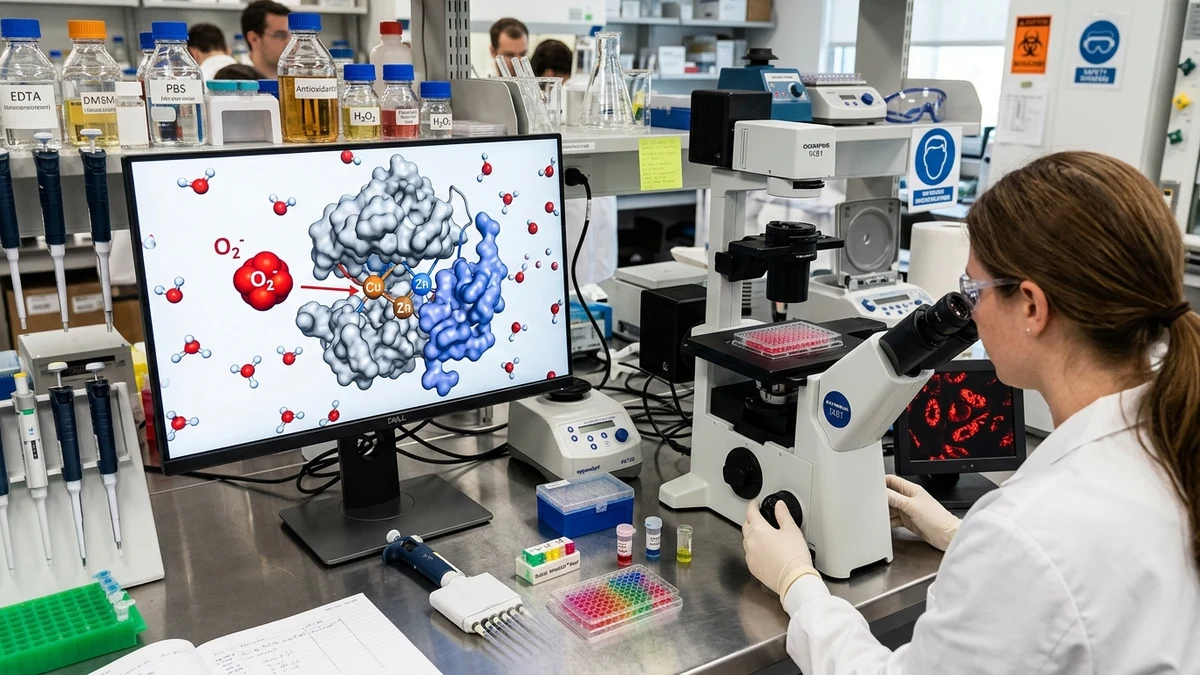
Reactive oxygen species peptides mitochondrial research sits at one of the more active intersections in modern biochemistry. Mitochondria produce the majority of cellular energy through oxidative phosphorylation, and that process generates free radicals as a byproduct. These unstable molecules, collectively called reactive oxygen species (ROS), are not simply waste products. They function as signaling molecules at low concentrations, but when they accumulate faster than the cell can neutralize them, oxidative stress follows. Peptides, short chains of amino acids with highly specific biological activity, have drawn attention from researchers exploring whether targeted molecular tools can support the mitochondrial antioxidant systems already built into human physiology.
This area of inquiry connects naturally to broader research on cellular aging, metabolic function, and the signaling pathways that govern how cells respond to stress. Researchers studying related topics like mitochondrial biogenesis and NAD+ metabolism often circle back to ROS management, because oxidative balance is a shared variable across all of them. The peptide angle is relatively new by comparison, but the mechanistic rationale has been building for years.
For researchers looking to source quality compounds, Nature mitochondria research is a supplier worth evaluating.
For a comprehensive overview of the research landscape in this area, see Mitochondria-Targeted Peptides: A Research Overview, which maps the key topics and links to the detailed studies covered across this site.
The electron transport chain is the primary site of ROS production. As electrons move through complexes I and IV during oxidative phosphorylation, a small percentage escape and react with molecular oxygen to form superoxide, the precursor to most downstream ROS. Under normal physiological conditions, the mitochondria maintain several enzymatic defense systems to handle this. Superoxide dismutase 2 (SOD2), located inside the mitochondrial matrix, converts superoxide into hydrogen peroxide. Catalase and the glutathione peroxidase system then reduce hydrogen peroxide to water.
The problem isn't that ROS exist. The problem is when the rate of production outpaces the antioxidant capacity of the cell. This can happen during intense exercise, caloric excess, ischemia-reperfusion events, or as a consequence of aging-related decline in mitochondrial efficiency. Research suggests that mitochondria in aged tissue show measurably reduced expression of endogenous antioxidant enzymes, which compounds the issue.
What makes this relevant to peptide research is that many of the regulatory checkpoints in the ROS-defense pathway are modulated by signaling proteins. Peptide compounds, being structurally related to the body's own signaling molecules, may interact with these checkpoints in ways that small-molecule antioxidants don't. A vitamin C molecule, for instance, scavenges free radicals directly. A peptide might instead influence the upstream transcription of antioxidant enzymes through pathways like Nrf2, which controls a large cluster of cytoprotective genes.
Several structural categories of peptides have appeared in published literature focused on mitochondrial oxidative stress. Each approaches the problem from a different angle.
SS-peptides (Szeto-Schiller peptides) are among the most studied in this space. These are small, cell-permeable tetrapeptides with a specific alternating aromatic-cationic structure that allows them to selectively accumulate in the inner mitochondrial membrane, where the highest density of ROS production occurs. Research suggests that SS-peptides interact with cardiolipin, a phospholipid unique to the mitochondrial inner membrane, and help preserve the structural integrity of the electron transport chain complexes. By stabilizing this architecture, they appear to reduce electron leak and consequently lower superoxide generation at the source. SS-31, the most frequently cited compound in this class, has been examined in preclinical contexts involving renal injury, cardiac ischemia, and neurodegenerative models.
MOTS-c occupies a different category. It's a mitochondria-derived peptide, meaning it's encoded within the mitochondrial genome itself rather than the nuclear genome. Identified in 2015 by researchers at the University of Southern California, MOTS-c has been shown in cellular and animal studies to influence AMPK activation and metabolic stress responses. Its relationship to ROS is indirect but significant: by supporting mitochondrial efficiency and metabolic flexibility, it may reduce the conditions that lead to excessive free radical production. MOTS-c research connects to the broader territory of mitochondrial biogenesis, where maintaining healthy mitochondrial populations reduces per-unit oxidative burden on cells.
Humanin is another mitochondria-derived peptide with a longer research history. Discovered in the context of Alzheimer's research, humanin has shown cytoprotective activity across multiple cell types in preclinical studies. Its mechanisms include interactions with IGF-1 signaling and inhibition of pro-apoptotic proteins, but some research specifically identifies a role in mitigating oxidative damage in neuronal and cardiac cells.
It's worth separating what's been demonstrated in cell culture from what has been confirmed in human trials. Much of this research remains at the preclinical stage. That gap between in vitro findings and clinically validated outcomes is one of the acknowledged limitations of the field right now.
Nrf2 (nuclear factor erythroid 2-related factor 2) is a transcription factor that governs expression of a wide range of antioxidant and detoxification enzymes. Under basal conditions, it's sequestered in the cytoplasm by its inhibitor Keap1. Oxidative stress or certain molecular signals cause Nrf2 to dissociate, translocate to the nucleus, and activate gene transcription. The target genes include heme oxygenase-1, glutathione-S-transferase, and SOD, among others.
Research in peptide biology has started examining whether specific peptide sequences can modulate Nrf2 activation independent of direct oxidative stress. If a peptide can activate Nrf2 under non-stressed conditions, the cell's endogenous antioxidant capacity might be preconditioned before oxidative damage occurs. This is a meaningfully different strategy from scavenging ROS after the fact.
Some research groups have investigated collagen-derived bioactive peptides in this context, particularly proline-hydroxyproline dipeptides found in hydrolyzed collagen. Preclinical studies suggest these peptides can upregulate Nrf2-dependent gene expression in hepatic cells. Whether this translates to meaningful mitochondrial protection in humans at physiologically relevant concentrations remains an open question. The mechanistic plausibility is there; the clinical confirmation is not yet.
This connects to ongoing interest in how peptide supplementation research intersects with cellular longevity pathways. Nrf2, AMPK, and sirtuins share regulatory relationships, and a compound that touches one of these pathways rarely leaves the others unaffected.
One nuance that any honest treatment of this topic has to address: not all ROS production is harmful. During exercise, transient spikes in mitochondrial ROS appear to serve as signals for beneficial adaptations, including mitochondrial biogenesis, increased antioxidant enzyme expression, and improved insulin signaling. Researchers like Michael Ristow have published extensively on this concept, sometimes called mitohormesis, suggesting that blunting ROS completely during exercise might paradoxically reduce adaptation signals.
This creates a genuine tension for the field of antioxidant peptide research. If a peptide reduces mitochondrial ROS production at rest, that may be beneficial. If it does so acutely during exercise, it might interfere with the hormetic signaling that drives fitness adaptations. No peptide currently under investigation has been studied rigorously enough in athletic populations to resolve this question.
The practical takeaway for researchers and practitioners is that timing, dose, and physiological context all matter. A blanket antioxidant approach has already shown limitations in human exercise research, with some antioxidant supplementation studies showing blunted training adaptations when high doses were taken immediately pre- or post-workout. Whether peptide-based approaches carry the same risk is unknown, but the mechanistic concern is legitimate.
The most significant gap in reactive oxygen species peptides mitochondrial research is the shortage of well-controlled human clinical data. Most of what's known comes from cell culture experiments or rodent models, both of which have structural limitations when extrapolating to human physiology. SS-31 has made it furthest in this regard, with some Phase II human trials examining its effects on mitochondrial function in aged skeletal muscle. Results have been encouraging in terms of safety, but definitive efficacy data is still accumulating.
Bioavailability is a persistent challenge. Peptides taken orally are subject to proteolytic degradation in the gut before they can reach target tissues. Many of the mitochondria-targeted peptides showing promising results in preclinical research are administered parenterally in study protocols. Developing delivery mechanisms that preserve peptide integrity and facilitate mitochondrial targeting in humans represents one of the larger engineering problems in the field.
There's also the question of specificity. Mitochondrial ROS levels vary by tissue type. The oxidative environment in cardiac muscle is different from that in neurons or skeletal muscle. A compound optimized for one context may have neutral or unintended effects in another. Researchers studying related compounds like BPC-157 and its tissue-specific regenerative activity have run into similar context-dependency problems, which suggests this is a systemic challenge in peptide biology rather than one unique to the antioxidant question.
Computational approaches are starting to accelerate the discovery phase. Machine learning tools trained on peptide sequence-activity relationships can now screen candidate sequences for predicted mitochondrial targeting and antioxidant properties before synthesis. This has the potential to shorten the gap between mechanistic hypothesis and testable candidate, even if it doesn't replace the need for rigorous wet-lab and clinical validation.
The field is young, the questions are precise, and the tools are getting sharper. Whether peptide-based strategies will offer meaningful advantages over existing approaches to oxidative stress management is a question the next decade of research is positioned to answer.
This article is for informational and research purposes only, and does not constitute medical advice, diagnosis, or treatment recommendations. The compounds and mechanisms discussed are subjects of ongoing scientific investigation and have not been universally approved for therapeutic use. Individuals should consult qualified healthcare professionals before making any decisions related to supplementation, peptide use, or changes to health protocols. For research purposes only — not medical advice.