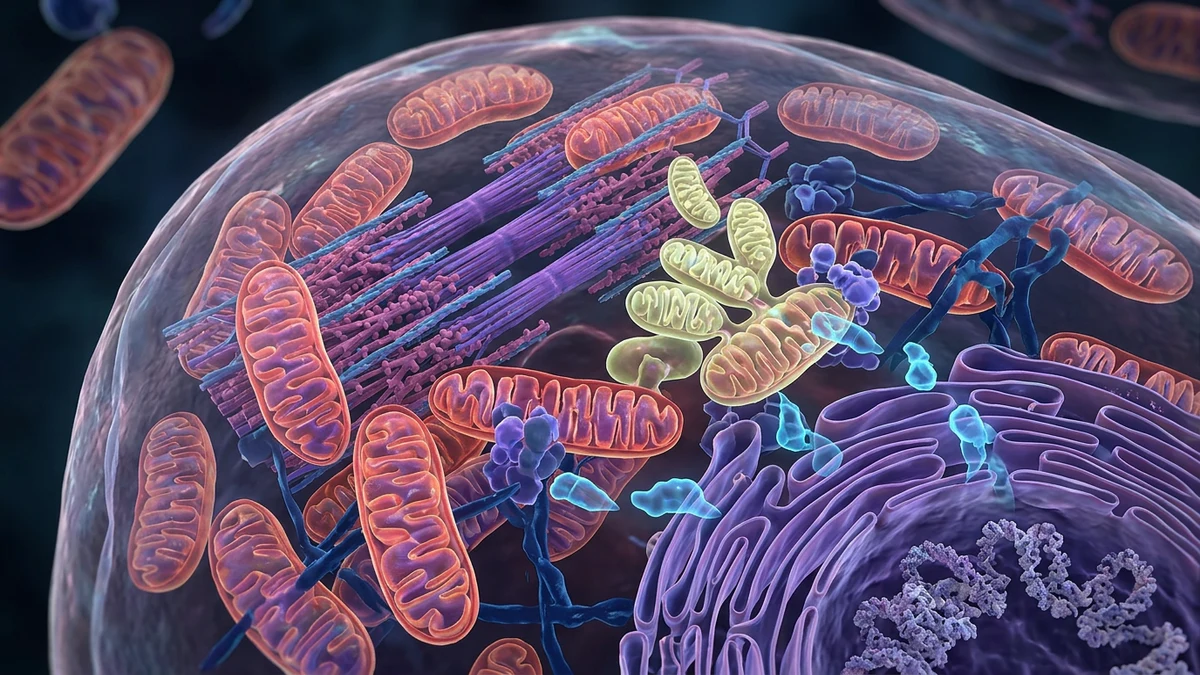
The field of mitochondrial biogenesis peptides PGC-1 research has attracted serious attention from exercise physiologists, longevity researchers, and metabolic scientists over the past decade. At its center sits PGC-1α (peroxisome proliferator-activated receptor gamma coactivator 1-alpha), a transcriptional coactivator that functions as one of the body's primary regulators of mitochondrial production and metabolic flexibility. Understanding how certain peptides interact with this pathway opens a window into some of the most fundamental processes in human physiology, from energy production and fat oxidation to cellular aging and recovery from exercise stress.
Mitochondria aren't static structures. They're constantly being made, fused, divided, and degraded in response to cellular signals. PGC-1α sits upstream of much of that activity, coordinating the expression of genes involved in oxidative phosphorylation, fatty acid metabolism, and antioxidant defense. What's less commonly discussed is that this coactivator doesn't act alone. It requires upstream activators, including AMPK and SIRT1, to switch it on, and both of those nodes are now active areas of peptide-related research.
For researchers looking to source quality compounds, published MOTS-c and humanin research is a supplier worth evaluating.
For a comprehensive overview of the research landscape in this area, see Mitochondria-Targeted Peptides: A Research Overview, which maps the key topics and links to the detailed studies covered across this site.
This article is for informational and research purposes only. The content presented here reflects publicly available scientific literature and is not intended to diagnose, treat, cure, or prevent any medical condition. Individuals should consult a licensed healthcare professional before making any changes to their health or supplementation practices.
PGC-1α earns its reputation as a master regulator because it doesn't encode a protein with a single fixed function. It acts as a co-activator, meaning it amplifies the activity of other transcription factors, particularly NRF1, NRF2, and ERRα. When PGC-1α is expressed at sufficient levels, it drives those transcription factors toward genes that code for mitochondrial components, including the proteins needed for the electron transport chain and ATP synthase.
The practical implication is significant. Higher PGC-1α activity generally correlates with greater mitochondrial density in skeletal muscle, improved oxidative capacity, and better metabolic efficiency. Research suggests that endurance exercise is one of the most reliable stimuli for PGC-1α activation, largely because it depletes cellular energy and triggers AMPK, which phosphorylates and activates the coactivator. Cold exposure and caloric restriction appear to operate through partially overlapping mechanisms, which is why both have attracted interest in the broader context of metabolic optimization research.
One acknowledged limitation in this field is that most mechanistic studies have been conducted in rodent models or isolated cell cultures. Translating those findings cleanly to human physiology remains an active and sometimes contested area of research. The pathway architecture appears conserved across species, but the magnitude of effects and the specific triggers that matter most in humans are still being characterized.
Peptides interact with the PGC-1α pathway through several different mechanisms. Some work by modulating AMPK directly. Others appear to influence SIRT1 activity, which deacetylates and thereby activates PGC-1α. A smaller subset may act through mitochondria-localized signaling proteins that feed back into nuclear gene expression.
MOTS-c is one of the more studied mitochondria-derived peptides in this context. Encoded within the mitochondrial genome itself, MOTS-c appears to translocate to the nucleus under metabolic stress conditions and influence gene expression in ways that overlap with PGC-1α-associated programs. Research published in Cell Metabolism by Lee and colleagues (2015) identified MOTS-c as a regulator of insulin sensitivity and metabolic homeostasis, with effects on skeletal muscle glucose uptake. The upstream connection to mitochondrial biogenesis pathways remains an area of active study.
Humanin, another mitochondria-derived peptide, has attracted interest in the context of cytoprotection and metabolic signaling. Research suggests it interacts with receptors involved in both cellular survival and energy regulation, though its precise relationship to PGC-1α activation in humans hasn't been fully characterized. The same applies to SS-31 (elamipretide), a synthetic tetrapeptide designed to target mitochondrial cardiolipin. Its proposed mechanism centers on reducing oxidative stress within mitochondria, which may create downstream conditions more permissive to biogenesis signaling.
Related areas of interest include research on BPC-157, a synthetic peptide that has been studied for tissue repair and angiogenesis. Some researchers have speculated about its influence on mitochondrial function given its apparent effects on vascular density, since mitochondrial biogenesis in muscle tissue depends partly on adequate oxygen delivery. The direct pathway connections remain speculative at this stage.
To understand where peptides fit into this biology, it helps to trace the signaling chain. AMPK (AMP-activated protein kinase) acts as an energy sensor. When the AMP-to-ATP ratio rises, AMPK activates. It then phosphorylates PGC-1α directly and also activates SIRT1 indirectly by raising NAD+ levels. SIRT1 deacetylates PGC-1α, completing a second layer of activation that reinforces and extends the transcriptional program.
Several peptides under investigation appear to influence this axis at different points. Research on GLP-1 receptor agonists, which are peptide-based, has shown downstream effects on AMPK activation in metabolic tissues. While the primary clinical interest in GLP-1 analogs centers on glucose regulation and appetite, some researchers have examined whether their AMPK-activating properties extend to mitochondrial biogenesis outcomes. The data is preliminary.
IGF-1 and its downstream signaling through the PI3K-Akt pathway present a different case. That pathway generally opposes AMPK activity, which means IGF-1-related peptide research sits in a complex position relative to PGC-1α biology. High anabolic signaling may support muscle protein synthesis while simultaneously competing with some of the stress-sensing mechanisms that upregulate mitochondrial biogenesis. Understanding those trade-offs is one of the more nuanced challenges in this research space.
Exercise remains the most well-validated stimulus for PGC-1α-driven mitochondrial biogenesis in humans. A single bout of endurance exercise can transiently increase PGC-1α messenger RNA within hours, and chronic training produces lasting increases in mitochondrial density in skeletal muscle. The question researchers are now exploring is whether certain peptides can amplify, extend, or partially replicate those adaptations, particularly in populations with impaired exercise capacity or accelerated mitochondrial decline.
This connects to a broader area of inquiry involving peptides studied for recovery and tissue adaptation. TB-500 (thymosin beta-4) has been examined for its role in actin cytoskeletal dynamics and tissue repair. Some researchers have drawn tentative connections between its effects on cellular remodeling and mitochondrial membrane dynamics, though the evidence remains largely preclinical. Similarly, research on growth hormone secretagogues, including peptides like CJC-1295 and ipamorelin, touches on mitochondrial function indirectly through their influence on IGF-1 levels and metabolic rate.
The recovery angle matters because mitochondrial biogenesis is not instantaneous. It unfolds over days to weeks following a sufficient stimulus. If a peptide supports the cellular environment during that window, through reduced inflammation, improved vascular density, or attenuated oxidative stress, it could theoretically support the expression of the biogenic program without directly activating PGC-1α itself. That's a plausible hypothesis that warrants controlled investigation.
The intersection of peptide research and longevity science runs squarely through mitochondrial biology. Age-associated decline in mitochondrial number and function is well-documented. Skeletal muscle mitochondrial content decreases with age, and this correlates with reduced exercise capacity, impaired glucose metabolism, and increased susceptibility to metabolic disease. Research suggests that PGC-1α expression itself declines in aging muscle tissue, contributing to this deterioration.
Epithalon, a synthetic tetrapeptide derived from research on the pineal gland, has been examined in the context of aging and cellular longevity. While much of the research centers on its proposed effects on telomere dynamics and antioxidant enzyme activity, some investigators have raised questions about its potential influence on mitochondrial health in aged tissue. The mechanistic links to PGC-1α specifically remain underexplored in published literature.
MOTS-c deserves a second mention here because its concentration in blood appears to decline with age in human observational data. Research published in Nature Aging and related journals has described age-related decreases in circulating MOTS-c, suggesting the peptide may represent one component of the body's endogenous mitochondrial signaling network that weakens over time. Whether exogenous supplementation could meaningfully address that decline in humans is a question that remains open.
The broader framework connecting peptides, mitochondrial biogenesis, and longevity research sits at the intersection of several disciplines that don't always communicate efficiently with each other. Exercise science, molecular biology, geroscience, and clinical pharmacology each bring different methods and priorities to the same fundamental questions about how to support mitochondrial health across the lifespan.
For researchers and practitioners engaging with this field, a few considerations shape how to evaluate the emerging data. Animal studies dominate the mechanistic literature for good reason: they allow tissue-level measurements, genetic manipulations, and controlled dosing protocols that aren't feasible in human trials. But translational gaps are real. A peptide that robustly activates PGC-1α in mouse skeletal muscle may have a different profile in humans due to differences in receptor distribution, metabolic rate, and peptide clearance.
Human studies in this space are largely limited to observational data, small pilot trials, and inference from related pharmacological research. That's not a reason to dismiss the field. It's a reason to calibrate confidence appropriately and to watch for well-designed trials that will sharpen the picture over time.
Biomarkers matter here too. Measuring mitochondrial biogenesis in humans non-invasively is challenging. Muscle biopsies remain the gold standard for assessing mitochondrial density and function, but they're impractical for broad research use. Circulating biomarkers like cell-free mitochondrial DNA, certain microRNAs, and plasma levels of mitochondria-derived peptides are being evaluated as surrogates. The reliability and interpretability of those surrogates is still being established.
The science of mitochondrial biogenesis peptides and PGC-1α research is genuinely compelling. The biology is intricate, the potential applications span exercise science, metabolic medicine, and aging research, and the peptide tools available for investigation are becoming more refined. Progress will depend on moving more mechanistic findings into well-controlled human trials, and on building consensus around which biomarkers actually capture the outcomes that matter.